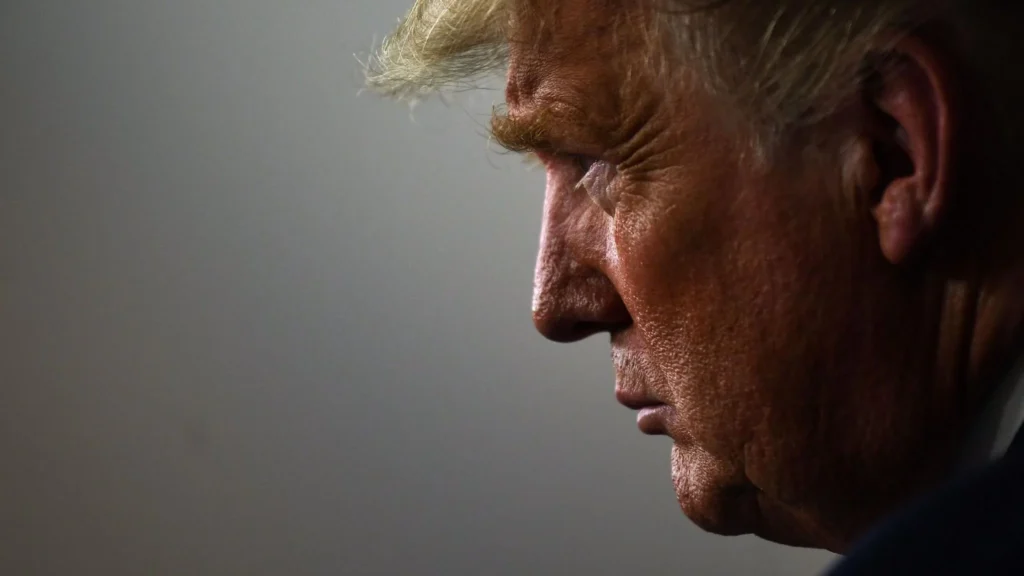
Donald Trump’s presidency should not be remembered primarily as a man, a movement, or even a political era, it should be remembered as an alarm bell. Trump did not create the rot in American government. He exposed it. He did not invent distrust in institutions, he revealed how deep it had already run. He did not break the system, he proved how broken it had become.
For decades, Americans across ideological lines felt that something was wrong. Wages stagnated while costs exploded. Wars never seemed to end. Corporations grew more powerful while families grew more fragile. And politicians promised change, then quietly preserved the same arrangements once elected.
Trump gave voice to that frustration. Sometimes clumsily, sometimes recklessly, and often imperfectly. Still, his voice unmistakably called out the corruption and dysfunction. His rise was not a fluke or a glitch. It was a reaction. When millions of Americans looked at Washington and said, “None of this represents me anymore,” Trump became the vehicle for that protest. And that reality should force an uncomfortable question: If Trump had never run, where would be as a nation today?
The real lesson of Trump’s presidency has nothing to do with loving or hating him. If you’re stuck on either side of that coin, I caution you to look in the mirror and ask yourself if it’s political programming that leads you to feel that way. Because having an unbiased approach has everything to do with understanding why so many Americans were willing to gamble on disruption at any cost.
But whether you love him or hate him, Trump’s presidency exposed three uncomfortable truths. The first is that our political class is deeply insulated by the consequences of its decisions. Members of Congress routinely vote for wars they will never fight, budgets they will never live under, and policies that affect everyone except themselves. They become millionaires while the country runs deficits. They trade stocks while regulating markets. They fail upward without consequence. Trump did not create that system. He simply called it out and benefited politically from public rage against it.
The second truth Trump exposes is that our institutions no longer command automatic trust. Media, government agencies, public health authorities, and even elections depend on credibility to function. Once credibility collapses, everything becomes contested. Trump did not invent skepticism. He exploited skepticism that already existed because institutions repeatedly violated public trust long before he entered politics.
And the third truth is one I see daily as I meet with voters. Americans feel powerless inside a system that claims to represent them. Voting every two or four years does not feel like real control when outcomes never change. People sense they are spectators in their own country; and Trump’s message, at its core, was simple: He will fight them for you. That message resonated because people felt no one else was.
But here is where the national conversation goes wrong. One side insists Trump is the disease while the other insists Trump is the cure. The problem is that both sides are wrong. Trump is a symptom, and that is coming from someone who highly respects our President. He’s a loud, disruptive, symptom, but that is exactly what we needed. He showed light to a pathway that was too dark to traverse for as long as any of us have been alive, except we are too busy trying to treat the symptoms than walking that path. And treating symptoms without addressing root causes only guarantees the next eruption will be worse, whoever the next leader may be.
So, what should Trump’s presidency actually mean to us? I believe it should mean Americans stop outsourcing responsibility for self-government and start fulfilling the duties that accompany our freedom. No politician is coming to save this country. Not Trump, not Biden or Harris or me or any future candidate, as well.
A self-governed society only survives if its citizens act like owners, not customers. That means demanding structural reforms instead of symbolic victories. It means focusing less on which party controls Congress and more on whether Congress is accountable at all. And it means taking action instead of sitting idly by.
It means insisting on term limits for members of Congress, bans on stock trading for elected officials. It means transparent budgets and real spending caps, serious consequences for corruption, a foreign policy that serves national interest, not contractor profits. It means a domestic policy that prioritizes families, workers, and communities over corporate lobbying- just to name a few of our problems. And these are neither left-wing or right-wing ideas. They are survival ideas.
Trump’s presidency should have done nothing except force a cultural reset. One where we stop defining our neighbors as enemies, end the practice of consuming politics like sports, and avoid the self-infliction of cheering when “our side” wins while the country loses. Because this division is only profitable for media companies, and is only useful for politicians, but remains deadly for our nation.
Recognition is the first step toward repair. Recognition that the system is broken, that millions of Americans are hurting, and that disagreement does not equal treason. Recognition that citizenship carries responsibility. Trump exposed America’s worst instincts, but he did not do that alone. We all did it, together, which is why recognition for each of us should start in the mirror.
Trump’s presidency exposed our desperation and exhaustion. He exposed how badly people want to believe change is still possible. And that desire is not dangerous, it’s promising. What is dangerous is leaving it unchanneled. The question now is not whether Trump returns to office. The question is whether Americans will see the light on the pathway he’s shown and dare to walk it.
We must remember that this country was built by ordinary people who refused to accept permanent decay. We need to decide that self-government is not a slogan, but a duty. Trump rang the alarm, and that is something every American should be grateful for. It is what we do after the alarm that will define the future. Not one man. Not one party. We, the people.